
Want best impact? Change yourself!
A lot of us want to create an impact, especially the ones that comes in B-I-G font size. Change the world. Stop global warming. Establish world peace. Find cancer cure. Stop wars. Leave a legacy that lasts forever. We want to conquer the world with our ideas, our creation, our accomplishments....
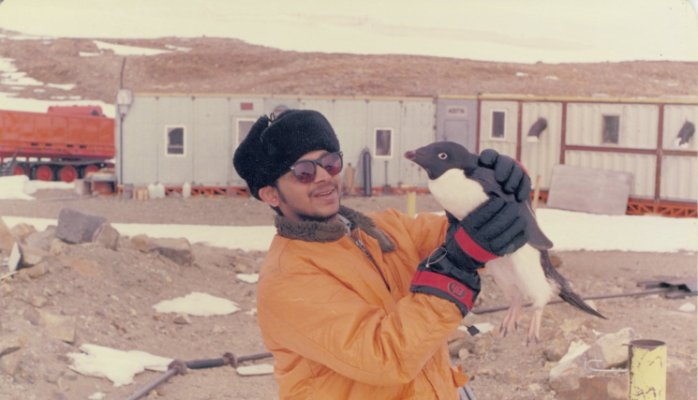
What 16months of stay at Antarctica taught me?
It's been twenty years since I went to the magnificent seventh continent (which, ironically, became the first continent that I visited, apart from Asia, where I was born and grew up). I just have to close my eye for a few seconds, and I am still able to teleport myself back to majestic and pristine Antarctica, and the Indian station Maitriwhich was my home for 16 months during 1993-95....

Three questions every program manager must ask
Suppose you are the new program manager assigned to a program. How would you go about finding your way inside the complex maze of a program, its stakeholders, sponsors, component teams and various vendors?...

Hard work is killing people. Literally!
Burnout is a serious issue for several countries, industries and people, even if we don't acknowledge in as many words. In our industry, where heroism, cowboy programming and all-nighters are considered cool and an integral part of the software subculture, there has been a (really) small effort to address work-life balance....

Let’s free up agile teams…
Why are we so parochial in software industry about not recognizing the bigger economic sense rather than limiting ourselves to a singular idea that collocated teams are the best option?...

Why is your agile still a lot like dogma on steroids?
I still continue to be amazed (thought ‘shocked’ and 'dumbfounded' will be a more appropriate words here) by the amount of dogma in agile circles. Do this! Don’t do this! Wasn’t agile meant to liberate us from the tyrannies of the so-called big monolithic non-agile white elephant processes, and create a more nimble mindset, flexible culture and adaptive process framework where ‘inspect and adapt’ was valued more than ‘dogma and prescription’?...

Is your plan just a placebo?
Plans have a huge credibility problem. For large part of recorded history, they have always had this problem. With all the advancements we have made in estimations, forecasting, scheduling, risk management and planning, our execution still continues to challenge us, at times even confound us....

Why user stories make sense?
User stories are meant to be a placeholder to initiate an early conversation between the product owner and the team on key hypotheses so that a quick validation of them could be done to refine/confirm/reject our understanding of what the customer really wants....

How do design and build an organization for success?
In my experience, there are three critical elements that need to be present in 'interlocking proportions' for any organization to truly achieve a sustainable long-term success. When I say 'interlocking proportions' I am implying two key things - one that there must be a natural and mutually complementary fit among all the components, and secondly these components are in such measure that they complement, ideally amplify, each other, rather than canceling out one component at the cost of other component....

Does your process help you preserve status quo, or deliver some kick-ass skunk works?
Problem-solving in the past has been dominated by methods involving rigorous and meticulous planning and flawless execution – something that has been questioned, largely by results (or rather the absence of it) in the recent years, if that is (still) the best approach when there are so many moving parts and the external world changes in a blink. We frequently ‘blame’ old practices of assembly plant-style waterfall days where it took years to get a project team to jump multiple hoops and just get a project done – in most cases, hopelessly delayed, unacceptable quality and overbudget....