
Why do you pay people? No, really?
I think the only reason why we (must) pay people is so they bring ideas to the workplace. New, big, fresh, stolen, borrowed, bold, controversial, unscientific, unproven, risky, weak, potential gamechangers, disruptor of status quo, creative, ridiculous, audacious (big hairy audacious is even better), slayer of mindless bureaucracy, harbingers of change...just about anything will do as long as they bring something to the workplace, as opposed to just being a plug-and-play part in the giant corporate machinery whose daily activities are pretty much pre-decided as per the giant process manual....

Why is your agile still a lot like dogma on steroids?
I still continue to be amazed (thought ‘shocked’ and 'dumbfounded' will be a more appropriate words here) by the amount of dogma in agile circles. Do this! Don’t do this! Wasn’t agile meant to liberate us from the tyrannies of the so-called big monolithic non-agile white elephant processes, and create a more nimble mindset, flexible culture and adaptive process framework where ‘inspect and adapt’ was valued more than ‘dogma and prescription’?...

Does the internet know you?
This blog post is about those brave 5% who decide to take matters in their hands and leave the comforts of corporate job and social prestige to walk alone into an uncertain but perhaps more exciting future. I salute their fortitude. Unfortunately, in many of those cases, they are extremely ill-prepared for the uncertain future that lies ahead…the internet doesn't know them!...
Where is the shark in your cubicle ?
A friend sent this story sometime back: The Japanese have a great liking for fresh fish. But the waters close to Japan have not held many fish for decades. So, to feed the Japanese population, fishing boats got bigger and went farther than ever. The farther the fishermen went, the longer it took to bring back the fish. The longer it took them to bring back the fish, the staler they grew. The fish were not fresh and the Japanese did not like the taste. To solve this problem, fishing companies installed freezers on their boats. They would catch the fish and freeze them at sea. Freezers allowed the boats to go farther and stay longer. However, the Japanese could taste the difference between fresh and frozen fish. And they did not like the taste of frozen fish. The...
How good is your ‘bad news management’ ?
No one likes surprises, least of all executives who might have given high-level commitments on project delivery to their peers in customer organizations, investors or other key stakeholders. I hold Project Managers largely responsible for poor ‘bad news management’. In most cases, there are half-baked estimates that never are a firm basis for project planning to begin with, or there are inaccurate project metrics that lead to an ambitious planning. During project execution, Murphy strikes and then the fun begins - the project manager is fighting a losing battle but is not willing to admit that (professional’s ego?), nor is he asking for help! The result is a blindly predictable situation where it is too late to do anything anymore. Could this have been avoided? Well, its possibility surely could have been lowered, even if not eliminated 100%. My advise on how...
Art Fry shares views on Failure…
In my previous post When are you planning to fail ?, I argued that early failures were a far more effective learning tool than early successes. Those ‘gentle failures’ could help you avoid, or at least minimize the chances of ‘grand failures’. My colleague from PMI NPDSIG, Kimberly Johnson, shared that post with some of her ex-colleagues (Thanks Kim !), including Art Fry, inventor of perhaps most-well-known office product, Post-It Notes.  Here is what he wrote back: “Good article, Kim. In most product development programs you must consider dealing with failure, because only one in 3000 to 5000 raw ideas become a success. So the question is, How do you check out the failures as quickly and inexpensively as possible? Like this:Like Loading......
When are you planning to fail ?
Yes, you read it right…when are you planning to fail ? In the world where insatiable hunger for ‘success’ is an obsessive-complusive disorder (OCD), we don’t think of ‘failure’ much. It is shunned, scoffed at, systematically eliminated (or mitigated, at least), avoided, bypassed, ignored….everything but embraced with open mind and open arms. All management ideas are directed towards the age-old wisdom of “if you fail to plan, you plan to fail” and not on something like…”what won’t kill you only makes you stronger”. All project management philosophies are centred around safeguarding the projects from any possible failures…but has that stopped projects from grand failures? Every risk management action is towards making the project safe from failing…and yet we still see so many projects biting the dust, struggling for survival. Failure appears to be a social embarrassment that is best avoided at dinner...
Ten Commandments for Revolutionary Change Agents
Revolutionaries are a restless lot. In a way, they are like the ‘shooting stars’ in an organization - they are seriously outnumbered by the hundreds of twinkle-twinkle little stars, they enter an organization with tails-on-fire hurry, and (try to) change everyone and everything around them within the short time span that they are there, and then they burn out (or just lose interest when the work they set out for is either accomplished, or get bored when it doesn’t get accomplished) and just move on. They don’t have a lot of time, patience or socialistic motives making small changes here and there, or to make elaborate plans and do surveys, investigations and pilots, and so on. They would rather be out there in the middle of heat, dust and all the adrenalin-pumping and chest-thumping action than be found napping in a...
Change yourself, not the mirror
Change is painful, especially when you have to change yourself. However, in reality all change is really about - changing yourself ! When people ignore this simple and timeless truth, they start accumulating a lot of ‘rigidity’ - growing at the rate of one day at a time, until that years-of-accumulated-and-hardened-behavior becomes a Frankenstein’s monster and an inseparable and indistinguishable part of themselves ! So much so, that they don’t even see that as the problem. I read somewhere that it takes an average of 21 days for a practice to become habit. I think the same must be true for negative change - i.e., refusal to adapt to changes around us. And in, perhaps, as little as 21 days, we just fortify ourselves against the impending and growing change around us. When that happens, another fantastic thing happens....
What is your cross-cultural quotient ?
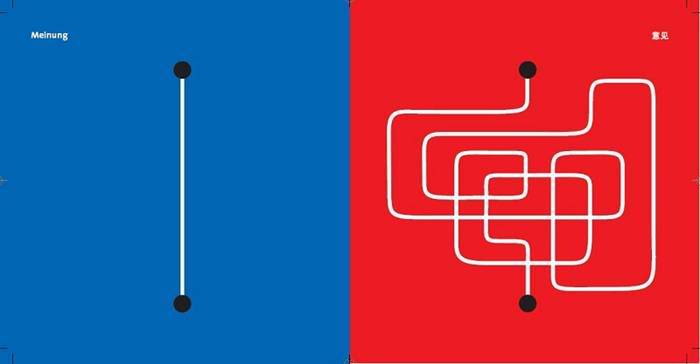
This mail is doing its customary rounds on the net, and not for a wrong reason! Though there are obvious pitfalls of stereotyping people, it also serves as a handy learning guide, even a field manual, when the similarities are generic in nature, and far outweigh the minute differences that might make an individual unique and different from others, but not dramatically different from other fellow tribesmen. The fact is we are all different, and success at workplace is also impacted by our ability to recognize, appreciate, respect and work through such cross-cultural differences. In today’s increasingly globalized world, this serves as a good starting point to recognize that there are people different from us, and a team’s success is impacted by mutual understanding of such differences. These icons were designed by Liu Young who was born in China and educated in...